

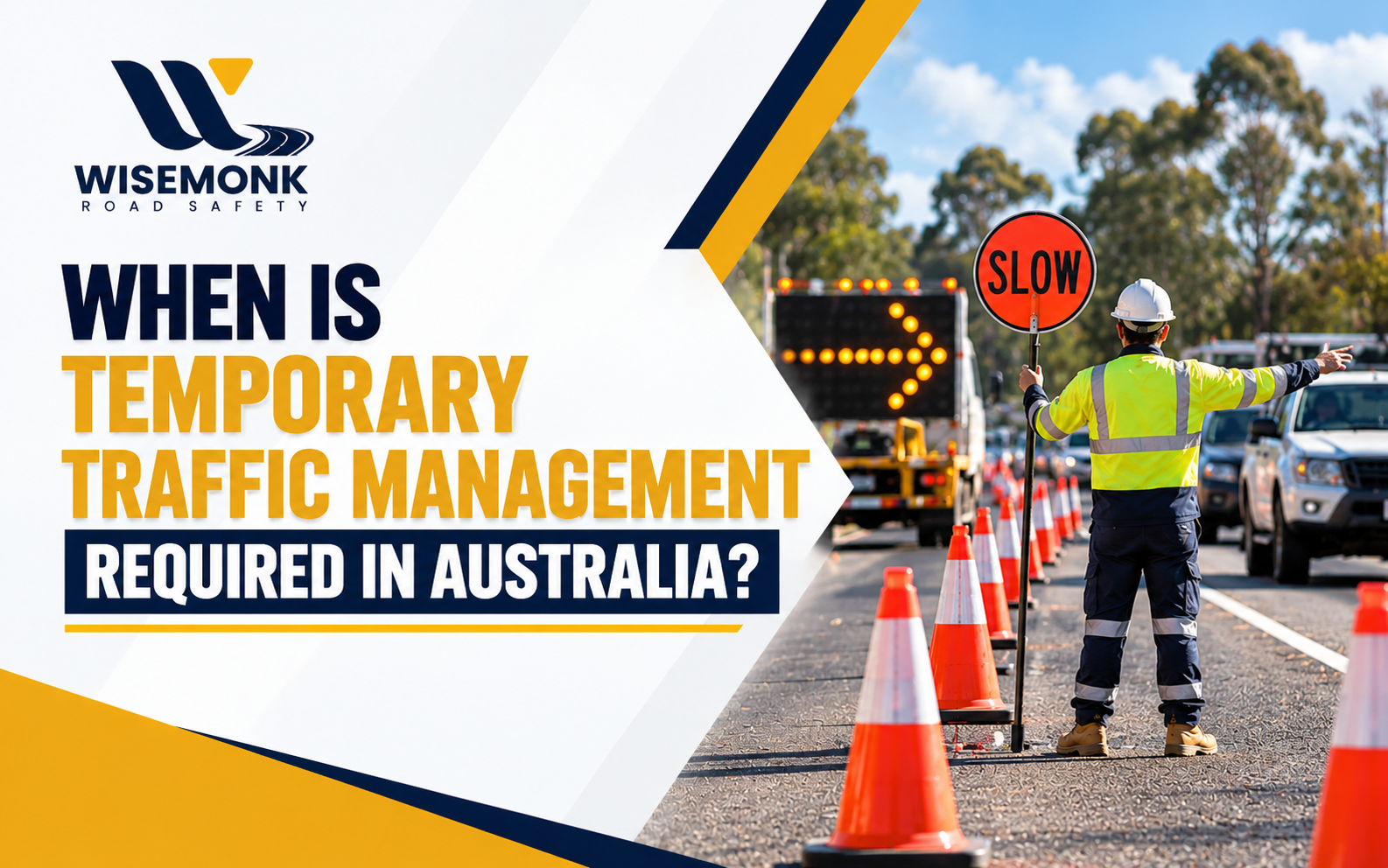
Temporary traffic management is required when roadworks, construction, maintenance or public events create risks or disrupt normal traffic conditions. It helps protect workers, motorists, cyclists and pedestrians while maintaining safe movement around temporary hazards.
Across Australia, traffic management requirements depend on the work location, road conditions, potential hazards and relevant state or territory regulations.
Understanding these requirements helps businesses plan safer projects, minimise disruptions and meet applicable safety obligations.
What Is Temporary Traffic Management?
Temporary traffic management involves planning and implementing traffic controls to manage vehicles and pedestrians around roadworks, construction sites and events.
Common traffic control measures include:
- Warning signs and temporary speed restrictions.
- Traffic controllers and safety barriers.
- Pedestrian diversions and alternative routes.
- Temporary road and lane closures.
- Safe access arrangements for construction vehicles.
Professional traffic management services help businesses select suitable controls based on worksite conditions and identified risks.
When Is Temporary Traffic Management Required?
Temporary traffic management is generally necessary when activities affect road safety, restrict access or change normal traffic movements. The specific arrangements depend on a site risk assessment and road authority requirements.
1. Road Construction and Maintenance
Road resurfacing, pothole repairs, line marking and infrastructure upgrades can expose workers and motorists to moving traffic.
These projects may require warning signs, temporary barriers, authorised speed restrictions and traffic controllers to manage vehicle movements safely.
2. Construction Near Public Roads
Construction activities involving heavy vehicles, machinery and material deliveries can create hazards near public roads.
A suitable traffic management plan helps identify risks, organise vehicle access and establish appropriate safety arrangements.
3. Road and Lane Closures
Temporary traffic controls are essential when roadworks require lane closures, detours or significant changes to normal traffic flow.
Depending on the location, projects may need approved closure arrangements, warning signs and traffic controllers. Professional road and lane closure services can assist with coordinating these activities.
4. Public Events and Community Activities
Festivals, sporting events, markets and parades may require traffic management when they affect public roads or pedestrian movements.
Organisers should consider vehicle access, pedestrian safety, parking restrictions and emergency routes.
5. Utility and Emergency Repairs
Water main repairs, electrical maintenance, drainage work and telecommunications installation may create hazards near moving traffic.
Temporary controls help separate work areas from road users and provide clear directions around affected locations.
What Australian Regulations Apply to Temporary Traffic Management?
Australia regulates traffic management through workplace safety legislation, road authority requirements and relevant technical standards.
Important references include:
- Austroads: The Guide to Temporary Traffic Management provides guidance for managing traffic around roadworks.
- Safe Work Australia: Provides guidance on identifying and controlling workplace traffic hazards.
- AS 1742.3: Covers traffic control devices for works on roads.
- State road authorities: Establish relevant permits, approvals and local roadwork conditions.
In NSW, certain activities affecting classified roads may require a Road Occupancy Licence from Transport for NSW. Requirements vary between jurisdictions, so businesses should confirm the applicable rules before starting work.
What Should a Temporary Traffic Management Plan Include?
A temporary traffic management plan (TMP) outlines how traffic risks will be managed throughout a project.
A suitable plan generally considers:
- Worksite location and project duration.
- Traffic volumes and road conditions.
- Vehicle and pedestrian safety risks.
- Traffic signs, barriers and diversion routes.
- Emergency access and incident procedures.
- Monitoring and inspection arrangements.
A TMP may also include detailed traffic guidance schemes showing the placement of traffic control devices.
What Is the Difference Between a Traffic Management Plan and a Traffic Guidance Scheme?
A traffic management plan explains the overall approach to controlling traffic risks, while a traffic guidance scheme illustrates the specific traffic control layout.
Traffic Management Plan (TMP) | Traffic Guidance Scheme (TGS) |
Outlines overall traffic arrangements | Shows traffic control layouts |
Identifies hazards and safety measures | Identifies signs and barriers |
Covers project activities and responsibilities | Guides worksite traffic control setup |
Includes monitoring and contingency procedures | Shows traffic movements and diversions |
Both documents support safer traffic management when required for the project.
Who Is Responsible for Temporary Traffic Management?
Project contractors, employers and other duty holders may have responsibilities for managing traffic risks under applicable workplace safety legislation.
According to Safe Work Australia, businesses must manage workplace health and safety risks so far as reasonably practicable.
Responsibilities may include conducting risk assessments, implement appropriate controls and coordinate with relevant road authorities. Engaging professional traffic controllers can support safer operations, but businesses must still meet their own legal obligations.
Why Choose WiseMonk Road Safety?
Effective traffic management requires careful planning, appropriate safety measures and coordination throughout the project.
WiseMonk Road Safety provides traffic management solutions for construction projects, roadworks and public activities.
Its services include:
- Traffic Management – Traffic control arrangements for worksites.
- Traffic Management Plans – Planning traffic movements and safety controls.
- Road and Lane Closures – Coordinating temporary road access changes.
- Event Traffic Management – Managing vehicle and pedestrian movements during events.
- Road Occupancy Licence Assistance – Supporting relevant approval processes.
These services help project teams coordinate traffic arrangements and manage risks around active worksites.
Conclusion
Temporary traffic management is essential when construction, roadworks, maintenance or events create hazards or disrupt normal traffic conditions.
Understanding applicable safety requirements, assessing site risks and selecting appropriate traffic controls can help businesses protect road users and maintain safer operations.
For projects requiring professional traffic management services, traffic planning or road closure arrangements, WiseMonk Road Safety offers solutions to support safer and more organised project delivery.
Contact WiseMonk Road Safety to discuss your project’s traffic management requirements.