

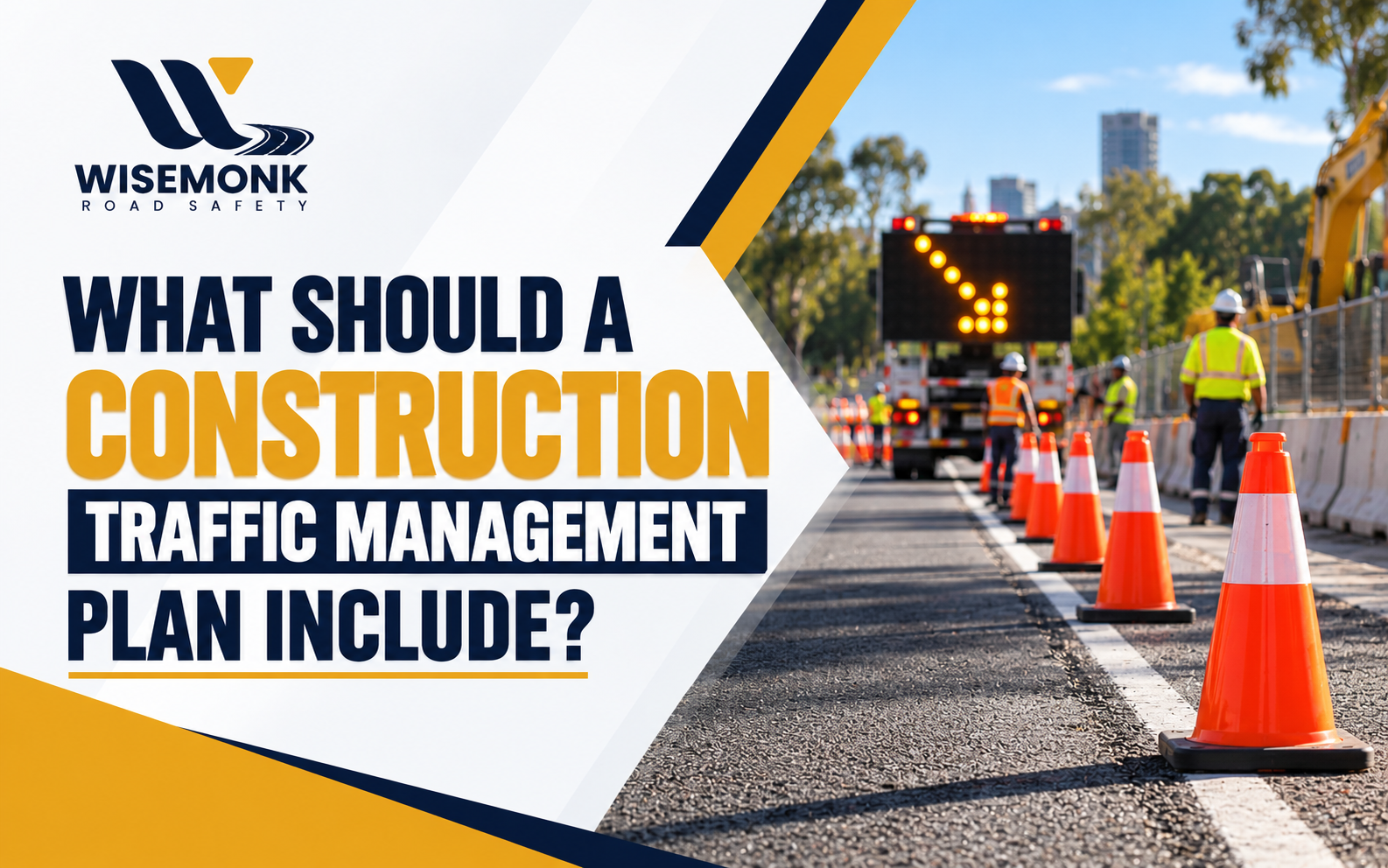
A construction traffic management plan should include site details, traffic risk assessments, vehicle access routes, pedestrian safety measures, temporary traffic controls, road closure arrangements, emergency procedures and ongoing monitoring.
Construction projects often affect surrounding roads, footpaths and vehicle movements. Without proper planning, these activities can create traffic congestion, safety hazards and disruptions for workers and the public.
In Australia, a well-prepared construction traffic management plan helps contractors manage these challenges while meeting applicable workplace safety requirements and road authority conditions.
Understanding its essential components can help project managers organise safer and more efficient construction activities.
What Is a Construction Traffic Management Plan?
A construction traffic management plan is a document outlining how traffic-related risks will be managed during construction activities. It explains how vehicles, pedestrians, cyclists and construction workers can move safely around an active worksite.
A typical plan covers:
- Construction vehicle routes and delivery arrangements.
- Pedestrian and cyclist access.
- Temporary road closures and lane restrictions.
- Traffic signs, barriers and control devices.
- Emergency access and incident procedures.
- Traffic monitoring and management responsibilities.
Depending on the project, contractors may also need a Traffic Guidance Scheme (TGS), road occupancy approvals or other permissions from the relevant authority.
Why Is a Construction Traffic Management Plan Important?
A construction traffic management plan helps reduce traffic-related hazards, protect road users and maintain safer worksite operations. It also establishes clear responsibilities for managing traffic throughout construction.
Construction sites frequently involve heavy machinery, delivery trucks and workers operating near moving vehicles.
Proper planning provides several benefits:
- Improved safety: Reduces conflicts between vehicles, pedestrians and construction workers.
- Better traffic flow: Helps minimise unnecessary delays around the worksite.
- Clear responsibilities: Identifies who manages traffic arrangements.
- Regulatory compliance: Supports applicable safety duties and approval conditions.
- Efficient operations: Improves coordination of deliveries and construction vehicles.
According to Safe Work Australia, businesses must eliminate workplace health and safety risks where reasonably practicable or minimise them when elimination is not reasonably practicable.
What Should a Construction Traffic Management Plan Include?
An effective construction traffic management plan should address the specific traffic conditions, hazards and operational requirements of the project.
1. Site Details and Project Information
The plan should begin with essential information about the construction site and surrounding road network.
Include:
- Project name, location and site boundaries.
- Construction activities and expected duration.
- Existing road layouts and intersections.
- Nearby schools, businesses and pedestrian routes.
- Project contacts and responsible personnel.
Accurate site information helps traffic planners identify suitable control measures.
2. Traffic Risk Assessment
A traffic risk assessment identifies potential hazards associated with vehicle movements and construction activities.
Common risks include:
- Heavy vehicles entering or leaving the worksite.
- Workers operating near moving traffic.
- Restricted visibility at access points.
- Pedestrians crossing construction vehicle routes.
- Reversing machinery and delivery trucks.
- Poor visibility during night works.
The assessment should consider the likelihood and consequences of each hazard before selecting appropriate control measures.
3. Construction Vehicle Access and Movement
A construction traffic management plan should clearly explain how construction vehicles enter, move through and exit the site.
It should identify designated entry points, loading areas, internal routes and turning arrangements.
Important considerations include:
- Scheduling deliveries to minimise congestion.
- Separating pedestrians from vehicle movements.
- Establishing safe loading and unloading areas.
- Reducing unnecessary reversing movements.
- Managing heavy and oversized vehicles.
Clear access arrangements help prevent conflicts between construction traffic and surrounding road users.
4. Pedestrian and Cyclist Safety
Construction activities must consider pedestrians and cyclists travelling near the worksite.
The plan should identify safe access routes, temporary diversions and suitable protective measures.
These may include:
- Temporary pedestrian walkways.
- Protective barriers and warning signs.
- Clearly marked crossing points.
- Alternative cyclist routes where necessary.
- Accessible pathways for people using mobility aids.
Any changes affecting public footpaths or cycling infrastructure should follow relevant authority requirements.
5. Temporary Traffic Control Measures
Temporary traffic controls help guide vehicles and pedestrians safely through changed road conditions.
Depending on the project, these may include traffic signs, cones, barriers, temporary signals and authorised traffic controllers.
A suitable plan should explain where controls will operate and how they will change during different construction stages.
For NSW projects, temporary traffic arrangements should follow applicable Transport for NSW guidance and relevant Austroads requirements.
Businesses requiring professional traffic management services can seek assistance with planning and coordinating suitable worksite arrangements.
6. Road and Lane Closure Arrangements
Some construction projects require temporary road closures, lane restrictions or traffic diversions.
The plan should identify:
- Proposed closure locations and operating periods.
- Alternative routes and diversion arrangements.
- Required traffic control devices.
- Access arrangements for affected properties.
- Emergency vehicle access.
- Relevant road authority approvals.
Professional road and lane closure services can help contractors coordinate temporary traffic restrictions.
In NSW, certain activities affecting roads may also require a Road Occupancy Licence, depending on the location, road authority and proposed work.
7. Emergency Response Procedures
The plan should explain how traffic-related incidents and unexpected situations will be managed.
These may include vehicle collisions, equipment breakdowns, damaged barriers or emergency service access requirements.
Emergency arrangements should identify responsible personnel, contact details, communication procedures and actions required to restore safe traffic conditions.
8. Traffic Monitoring and Plan Reviews
Traffic conditions can change throughout construction, making regular monitoring essential.
Reviews should consider:
- Changes to construction activities.
- Unexpected congestion or delays.
- Traffic incidents and safety concerns.
- Pedestrian access changes.
- Weather and visibility conditions.
- Updated approval requirements.
The project team should revise traffic arrangements whenever existing controls no longer adequately manage identified risks.
What Is the Difference Between a Traffic Management Plan and a Traffic Guidance Scheme?
A Traffic Management Plan (TMP) outlines the overall strategy for managing traffic risks, while a Traffic Guidance Scheme (TGS) illustrates specific temporary traffic control arrangements.
Traffic Management Plan (TMP) | Traffic Guidance Scheme (TGS) |
Explains the overall traffic management strategy | Shows temporary traffic control layouts |
Identifies hazards and safety measures | Identifies signs, barriers and device locations |
Covers vehicle and pedestrian movements | Guides traffic through or around work areas |
Includes responsibilities and monitoring | Supports implementation of specific controls |
Addresses broader project requirements | Focuses on particular traffic arrangements |
The Austroads Guide to Temporary Traffic Management provides guidance on traffic management planning and temporary traffic control arrangements.
For projects requiring detailed layouts, professional Traffic Guidance Scheme services can assist with preparing suitable traffic control arrangements.
Who Should Prepare a Construction Traffic Management Plan?
A construction traffic management plan should be prepared by a suitably competent professional with knowledge of traffic risks, construction activities and relevant road authority requirements.
Depending on the project, specific qualifications or authorisations may apply.
Working with experienced traffic management professionals helps contractors assess hazards, develop appropriate controls and coordinate required documentation.
How Can WiseMonk Road Safety Help With Construction Traffic Management?
WiseMonk Road Safety provides traffic management-related services for construction projects and other activities affecting road users.
The team can assist contractors with planning and coordinating traffic arrangements based on project requirements.
Relevant services include:
- Traffic Management Plans – Planning traffic arrangements for construction activities.
- Traffic Management – Managing vehicle and pedestrian movements around worksites.
- Traffic Guidance Schemes – Preparing layouts for temporary traffic controls.
- Road and Lane Closure – Coordinating temporary traffic restrictions.
- Road Occupancy Licence – Assisting with relevant road occupancy requirements.
Professional support can help project teams coordinate traffic arrangements while considering worksite safety and operational needs.
Conclusion
A well-prepared construction traffic management plan helps protect workers, pedestrians, cyclists and motorists while supporting efficient construction operations.
It should include site information, risk assessments, vehicle access arrangements, pedestrian safety measures, temporary traffic controls, road closures, emergency procedures and regular monitoring.
For construction projects across Sydney and surrounding NSW areas, WiseMonk Road Safety offers professional traffic management-related services to support safer worksite arrangements.
Explore WiseMonk Road Safety’s traffic management services to discuss your construction project’s requirements.